My research lies at the intersection of macroeconomics and finance, with a focus on financial stability, emerging economies, and macroprudential policy.
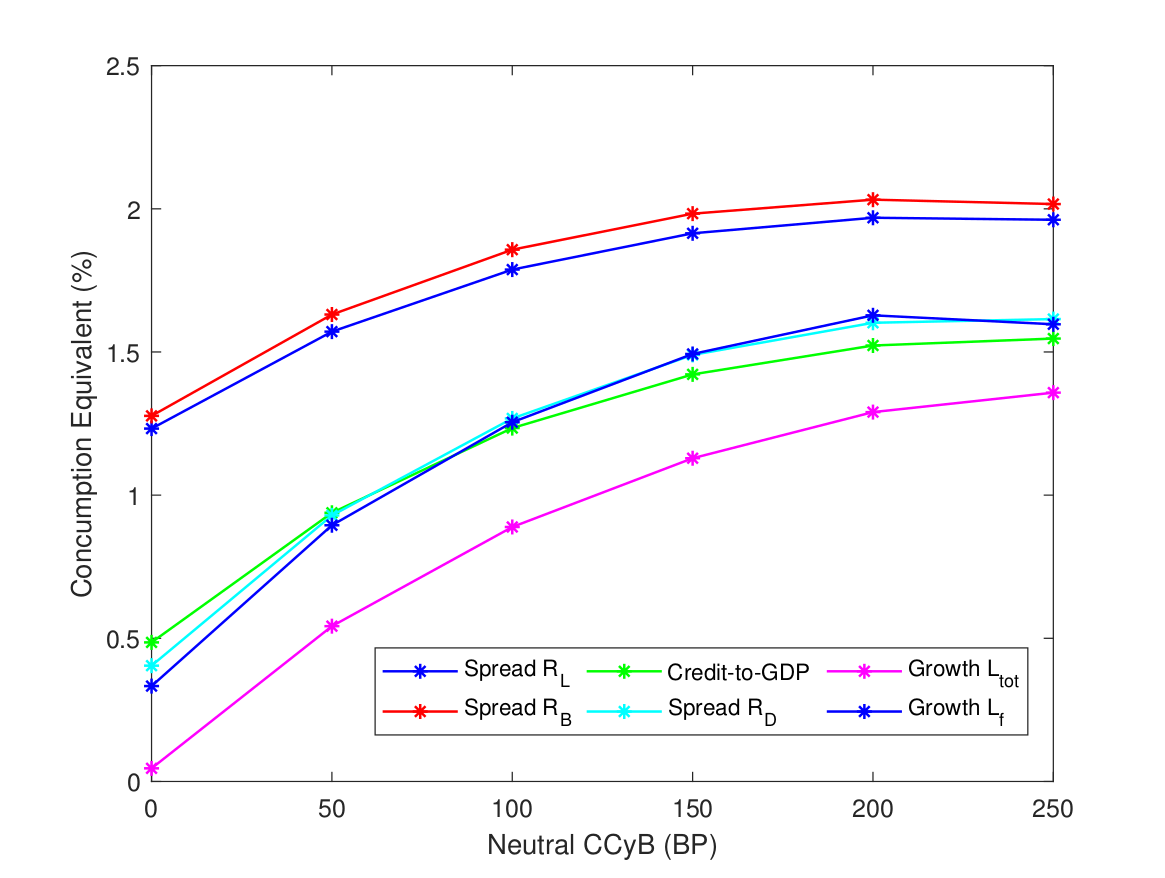
How important, for welfare, is the counter-cyclical capital buffer (CCyB) relative to other —higher and more permanent— bank capital requirements? While there is a better understanding of the effect of a-cyclical higher capital requirements on banks’ resilience and credit supply, much less is known about the marginal effects of introducing a macroprudential counter-cyclical capital requirement. In this paper, we study and rank the welfare gains of introducing several simple and implementable financial policy (CCyB) rules that co-exist with monetary policy. We find that the institutional design of the financial-policy instruments matters. In particular, a zero lower bound on the CCyB interacts with its counter-cyclical nature and provides a rationale for a positive neutral level. We build our analysis based on a quantitative macro-banking model with two main frictions;nominal rigidities and financial frictions, which we estimate for Chile.
Market risk modeling with option-implied covariances and score-driven dynamics
The North American Journal of Economics and Finance, with Rodrigo Herrera.
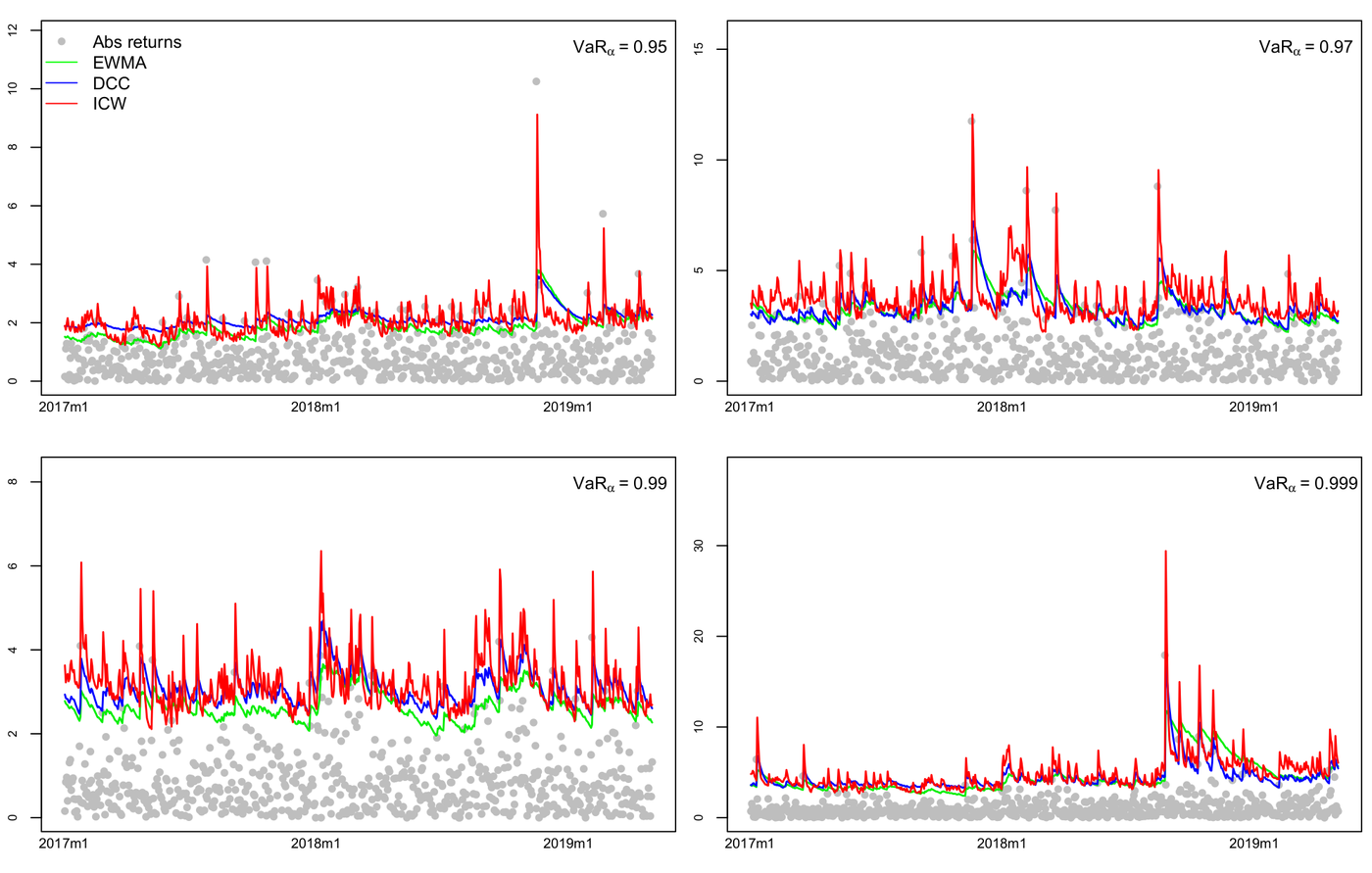
In this paper we make use of option-implied volatilities to build a time-varying implied correlation matrix. Then, we use this matrix to estimate jointly both the covariance matrix of the returns and the implied covariance matrix dynamics. Finally, we do a backtest and show that the proposed model can effectively use the risk-neutral information to model the variance of the returns and to forecast the Value-at-Risk. Our results show that, in general, the proposed model outperforms the benchmark while considerably reducing the number of parameters to be estimated.
Competing Value-at-Risk forecasts across confidence levels
Journal article
2023-06-01
Exchange rate volatility and the effectiveness of FX interventions: The case of Chile
Latin American Journal of Central Banking, with Alejandro Jara.
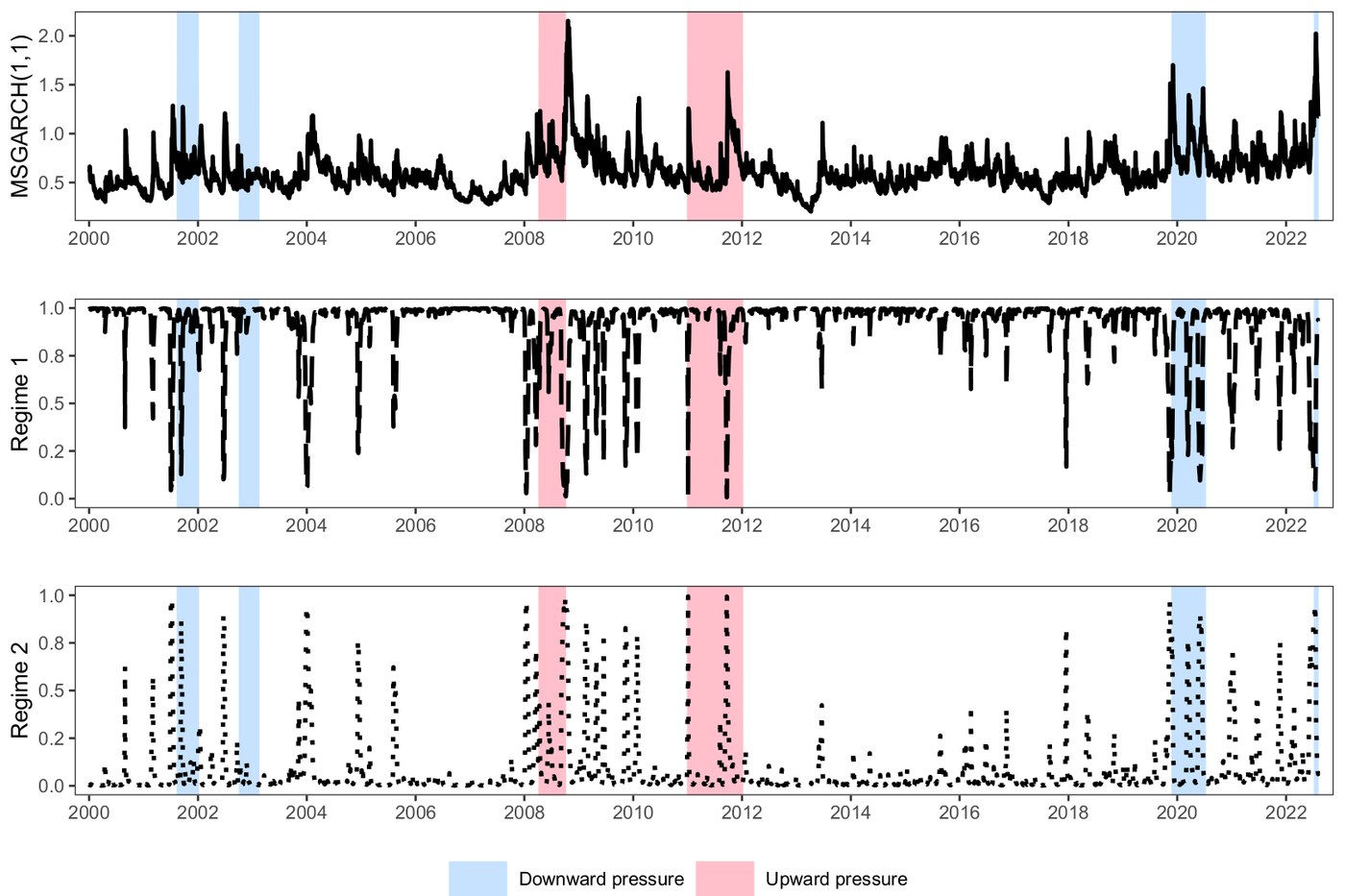
In this paper, we study the effectiveness of FX interventions in Chile since adopting a fully flexible exchange rate regime in the late 1990s. In particular, we ask whether these interventions have dumped excess exchange rate volatility and reduced its probability of being in a high volatility state. To do so, we rely on a high-frequency GARCH(1,1) volatility model with Markov-Switching regimes and evaluate the effectiveness of FX interventions within a local projection setting. We show that FX interventions in Chile tend to occur during high exchange rate volatility periods, which correlate with domestic and foreign financial factors. Moreover, we show that the FX intervention that started by the end of 2019–the latest intervention included in our study–effectively reduced the exchange rate volatility and the probability of being at a high volatility state.
Exchange-rate volatility and estimated regimes around interventions
Journal article
2023-03-01
Estimates of the US shadow-rate
Latin American Journal of Central Banking, with Rodrigo Alfaro.
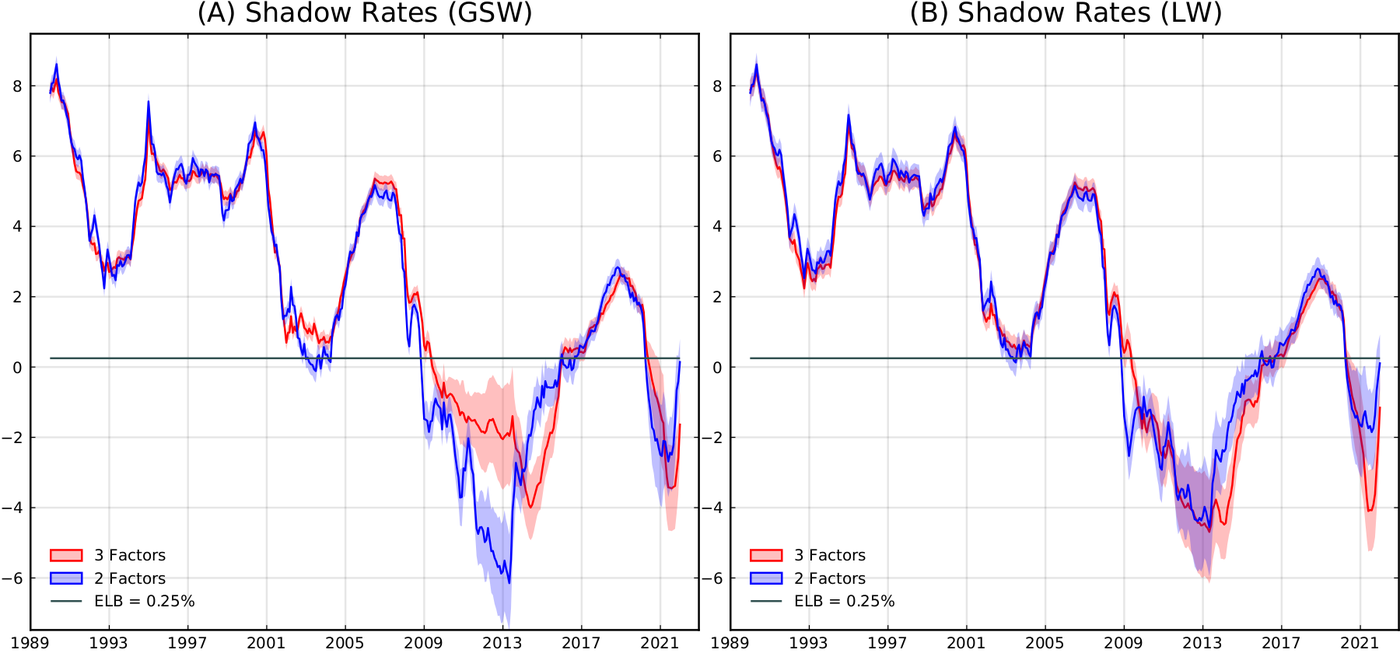
This article provides several estimates for the shadow rate (SR) of the short-term interest rate in US. We assume maximal models with two and three Gaussian factors, and we use forward rates to estimate the model’s parameters. Based on that, we conclude that point estimates of SR should be taken with caution because they depend on the characteristics of the data set, including the sample size, maturities, and smoothness. The latter is even more crucial than other settings discussed previously in the literature, such as the number of factors.
Early-stage projects for which I currently share only a title and a brief abstract. Drafts are not yet available.
Work in progress
2026-01-01
The Credibility Cost of Redemption: Local Currency Debt and the Inflation Risk Premium
Emerging markets increasingly borrow in local currency from foreign investors. This reduces currency mismatch but exposes lenders to inflation risk. We combine an NLP measure of central-bank communication with foreign-ownership data for 15 emerging economies to study how debt structure shapes term-premium responses to policy signals. Tightening signals have no significant association with the term premium when foreign ownership is low, but are associated with a 3.22 basis point increase in the 10-year term premium at the 75th percentile of foreign ownership. The response reflects adverse news about inflationary fundamentals rather than expected tightening. A model in which the government’s incentive to inflate rises with the local-currency debt share rationalizes this pattern.
Work in progress
2025-09-01
The Sovereign-Bank Nexus, Credit Cycles and Macroprudential Policy
This paper studies the macro-financial implications of the sovereign-bank nexus and its relevance for macroprudential policy design, with a focus on emerging market economies (EMEs). Using a panel of advanced and emerging economies, I document that banks’ exposure to government debt has increased steadily over the past decade, particularly in EMEs. I find that sovereign-bank exposure, sovereign risk, and government debt are significant drivers of the credit cycle in EMEs, but not in advanced economies (AEs). These relationships are nonlinear, with stronger effects during credit booms. To explain these findings, I explore credit dynamics in a model where banks must allocate funds between sovereign bonds and private lending subject to capital requirements and sovereign default risk. Future work will assess optimal macroprudential policy in this environment.